
See how Stena Recycling Battery Center in Farum, Denmark, taps WireFlow Donsö system for second-life application.
2025-09-29
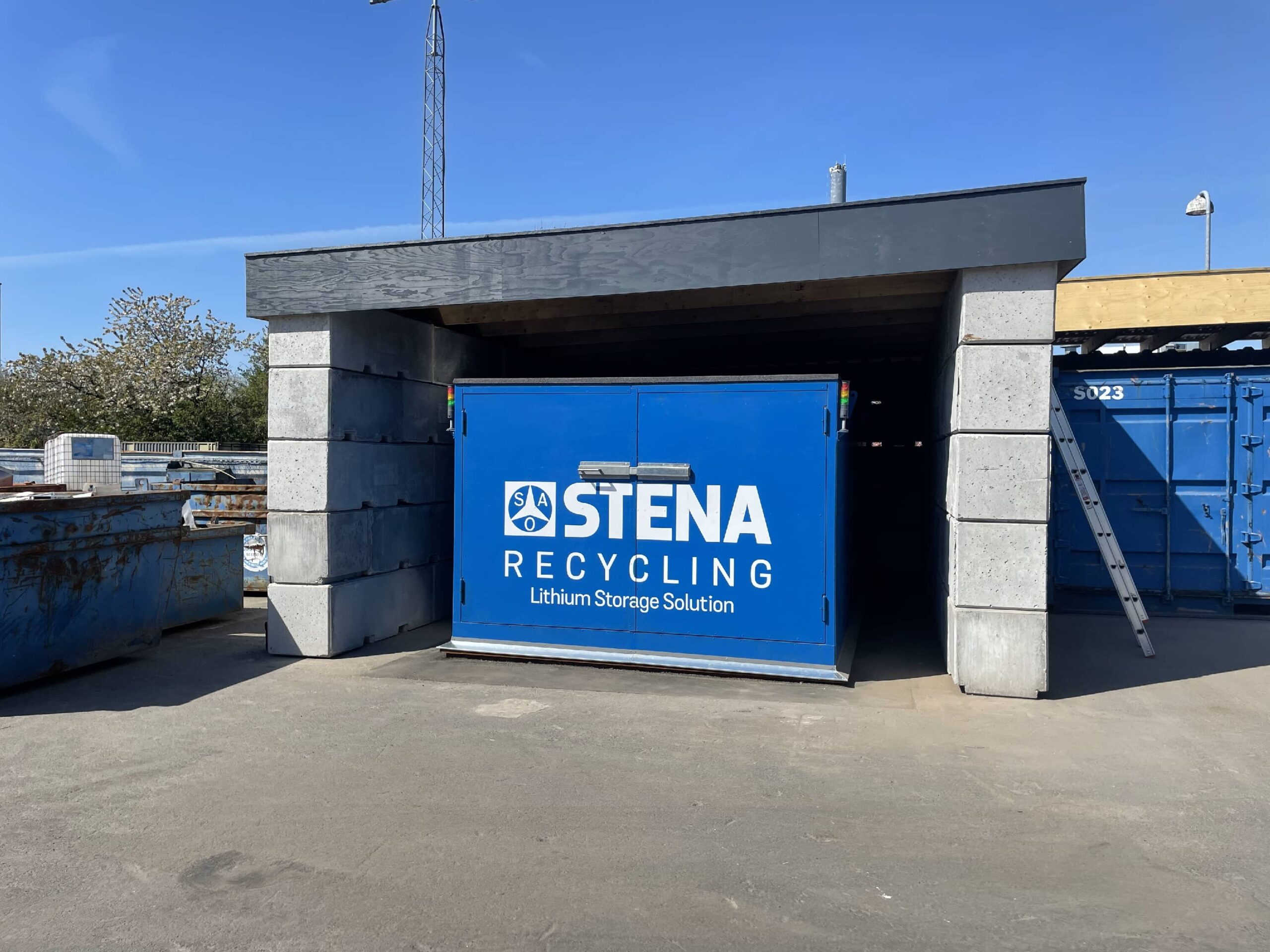
Stena Recycling Battery Center in Farum Denmark
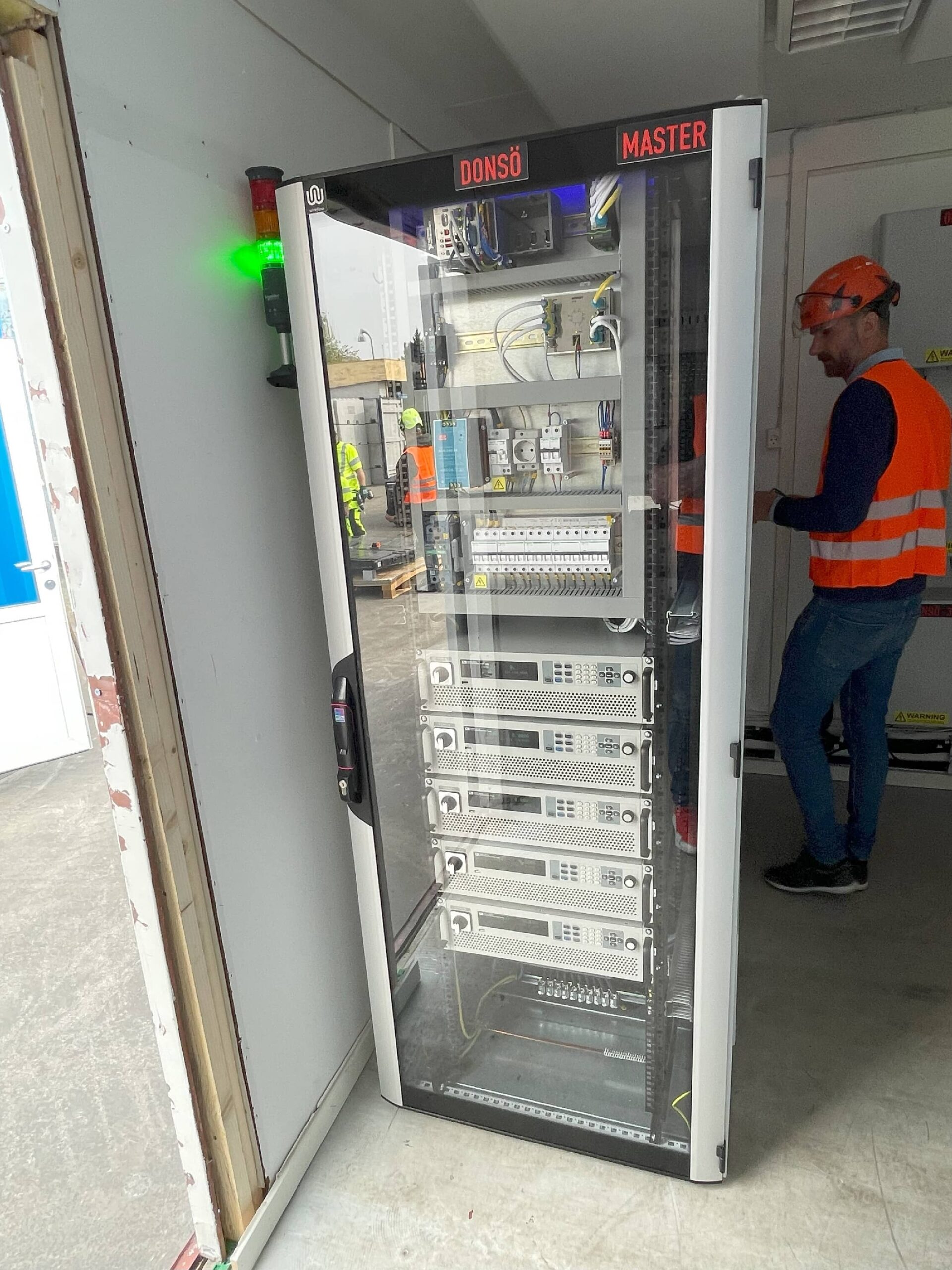
Donsö central cabinet
With at least 30 million zero-emission electric vehicles forecasted to be on EU roads by 2030, the EU battery directive aims to ensure batteries can be repurposed, remanufactured, or
recycled at the end of life. Up to 18 times more lithium and five times more cobalt will be needed by 2030. Manufacturer requirements include minimizing waste and reusing or recycling material content, how batteries should be safely dismantled, transported, and recycled, and disclosure of the environmental and health impact of contents.
Stena Recycling Solution
Stena has invested in new battery centers equipped with the WireFlow Donsö system, employing WireFlow’s comprehensive Bifrost system for the reuse and recycling of EV batteries. Donsö diagnoses EV-battery health and determines suitable second-life applications or complete discharge to recycle core minerals. WireFlow Total- DischargeTM is employed to ensure no energy is left before recycling. Flexibility
Managing both battery packs and modules, Donsö is designed to run ten channels simultaneously, independent of each other, delivering 6kW per channel. Environmentally friendly, the system sends energy back to the grid. Donsö enables the use of big data and statistical models. Outcome can be used for:
- Battery characterization
- Battery state estimation
- Battery remaining life estimation
Scalable
Stena selected Dons. as it aimed for a solution where battery centers could be designed differently, and the system could be scalable to adapt to individual requirements.
Safe
Bifrost connection nodes – equipped with contactors, shunts, fuses and IOs to control the measurement and reach an elevated level of safety – are located as close to battery packs as possible, minimizing cabling. Each battery is connected using DC cabling and temperature sensors to the distributed Bifrost node, controlled by the central cabinet and operator station. A series of safety checks are performed and the user is alerted should any test fail criteria – halting the process.
- System checks ensures battery is correctly connected
- Contactors in Bifrost node activated to connect battery to power electronics in central cabinet
- System measures battery voltage – checks level in expected range
- Temperature sensors checked, ensure valid values reported
- System Feature: Operation station is single point of control for all channels
During discharge, system monitors and logs:
- Individual sensor temperature
- Temperature difference between sensors
- Voltage
- Current
- Power
- Aggregated Power
Safety is a priority: The system will stop the discharge if the temperature exceeds the limit. With process automation as a priority, Dons. is fully integrated into the Stena production system making it a seamless part of the entire battery handling process. All tests can be initiated from adjacent systems and results are stored in a central database for traceability and analysis.
Everything in the process is logged and saved, ensuring each battery and all recycled parts are traceable. Employing Dons., Stena Recycling is provided with the capability of safely discharging EV batteries for recycling and assurance that they can fulfil the requirements of the EU battery directive.
XXXX
Lithium Recovery from Spent Electric Vehicle Batteries
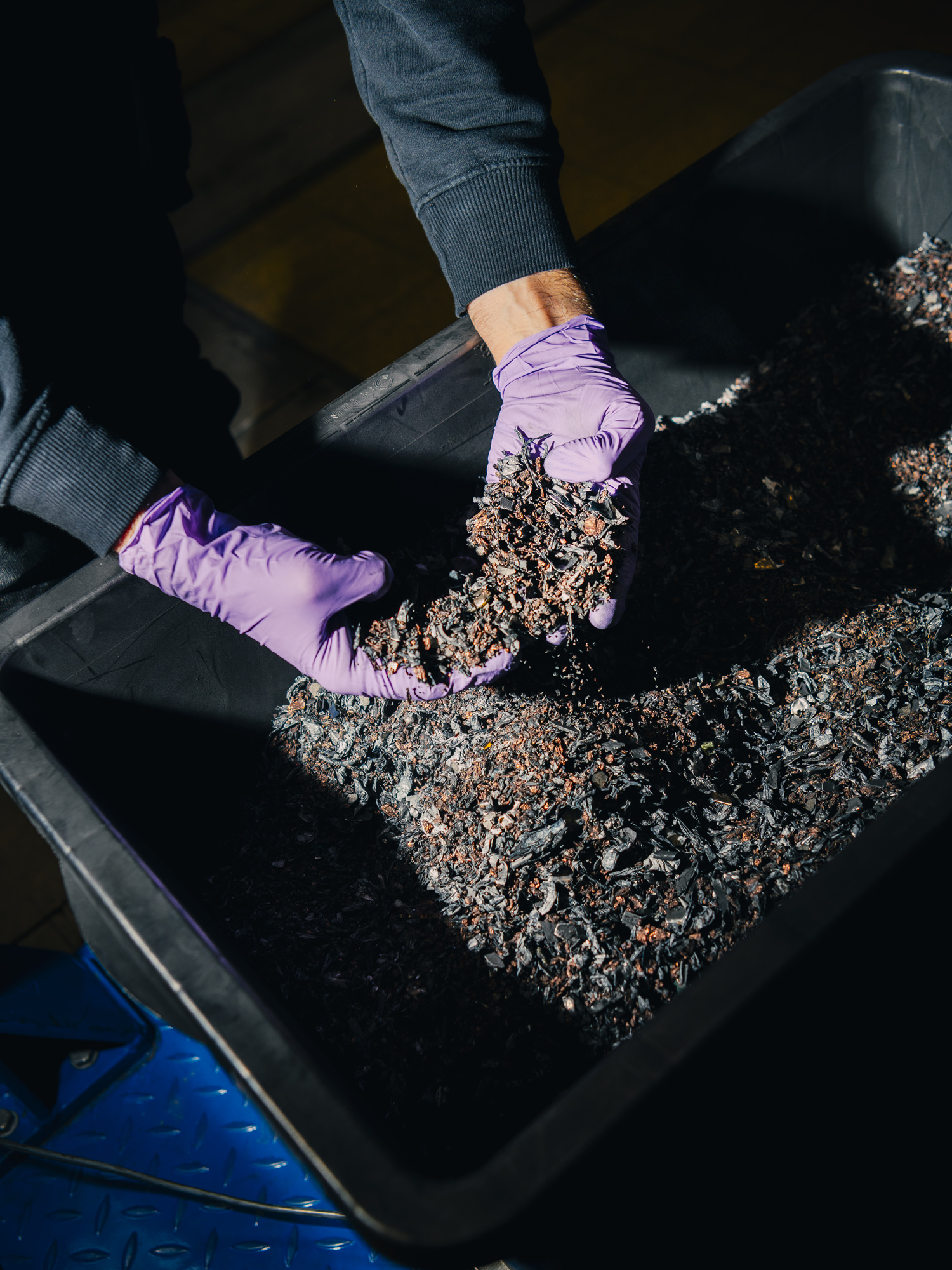
European companies cylib and Syensqo reported a significant milestone in circular battery materials processing by producing high-purity lithium hydroxide from spent electric vehicle (EV) batteries.
According to the joint press release, this collaboration would mark a major advancement in the recovery of valuable materials, “as very few recycling companies today can produce lithium at battery-grade, especially lithium hydroxide, the preferred form of lithium for new EV batteries”. This achievement would enable the extraction and purification of lithium from shredded battery electrodes, known as black mass, from different battery chemistries, such as NMC (nickelmanganese- cobalt) and LFP (lithiumiron- phosphate), on a single operating line. That approach would simplify the recycling process, increases versatility and potentially reduces capital expenditures (CAPEX).
“Syensqo’s technology perfectly complements cylib’s hydrometallurgical process, enhancing both the yield and purity of recovered lithium,” Laurent Cohen, in charge of Strategic Development and Alliances for Mining Solutions at Syensqo, was cited. “By combining our expertise in solvent extraction with cylib’s process, we’re establishing a scalable, high-purity lithium recovery route aligned with Europe’s circular economy and battery regulation goals.”
As part of the project, hundreds of liters of cylib’s lithium-rich effluent were processed by Syensqo using an extraction technology co-developed with its engineering partner, Tenova Advanced Technologies. The process uses CYANEX 936P, Syensqo’s proprietary solvent extractant. Following extraction, purification, conversion and crystallization, the resulting product meets, and in some respects exceeds, the strict purity standards required by leading cathode active material (CAM) manufacturers, the information said.
“This collaboration with Syensqo demonstrates our commitment to working continuously with partners to develop new processes and expand our technological leadership in battery recycling,” Matthias Breidenbach, Vice President Commercial at cylib, informed. “By combining our innovative hydrometallurgical expertise with Syensqo’s advanced solvent extraction technology, we are setting new standards for lithium recovery efficiency and purity.”
As emphasized, this achievement also advances the objectives set by the European Union for lithium recovery in battery recycling. According to the Battery Regulation (EU) 2023/1542, adopted two years ago, recyclers must recover at least 50 percent of the lithium content in battery waste by the end of 2027, and no less than 80 percent by the end of 2031.